

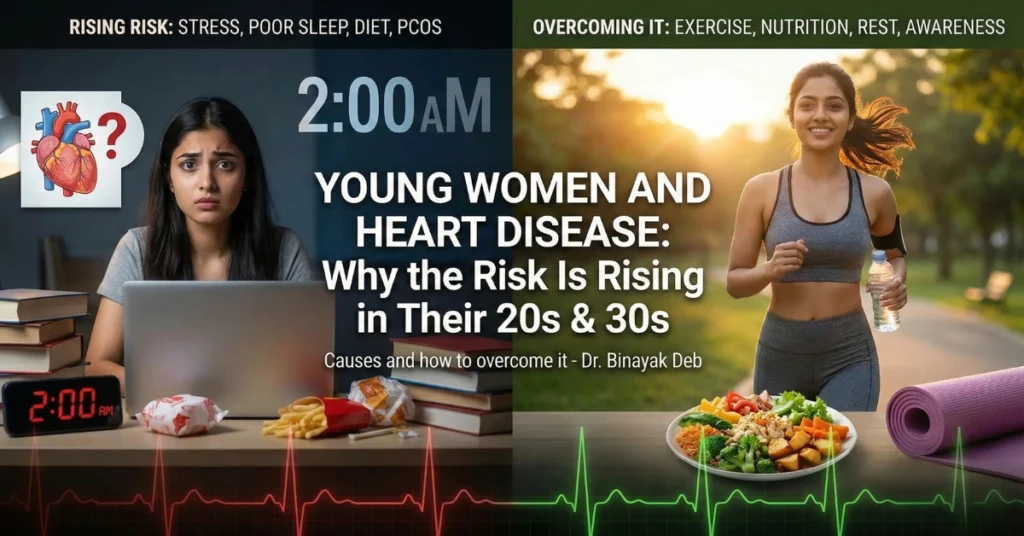
For decades, heart disease was seen as a known entity predominantly of men, in their 50’s and 60’s. Women , particularly young women in their 20’s and 30’s were thought to have hormonal protection, with cardiovascular risk something to worry about later in life. That assumption no longer holds true in this current time. Globally, physicians and cardiologists are seeing a worrying rise in heart disease risk factors and early heart disease among women in their 20s and 30s.
Why the Risk Is Rising in Their 20s and 30s?
This shift is not driven by a singular cause. It reflects the cumulative impact of modern lifestyles, hormonal disorders like polycystic ovary syndrome (PCOS), chronic stress, poor sleep, and increasingly unhealthy dietary patterns. Individually, each factor may seem manageable. Together, they create a perfect storm for early cardiovascular damage for young women.
The Changing Face of Heart Disease in Young Women
Young women today are developing conditions that were once rare at this age: obesity, insulin resistance, type 2 diabetes, high blood pressure, and high cholesterol.
Importantly, heart disease in women often presents in not a classical manner as they present in men. Symptoms may be subtle, atypical, or dismissed as anxiety or fatigue. When combined with delayed risk recognition, this can result in missed opportunities for prevention.
Lifestyle Shifts and Metabolic Health
One of the strongest drivers of rising heart disease risk is lifestyle change. Physical activity levels among young women have dropped sharply. Sedentary work, prolonged screen time, and long working hours leave little room for regular exercise.
Weight gain often begins in the early 20s and accelerates with career pressures, pregnancy-related changes, or hormonal disorders. Central obesity, rather than overall weight alone, is particularly harmful. Organ fat ( in liver, kidneys etc) promotes insulin resistance, chronic inflammation, and abnormal lipid profiles, all of which accelerate heart disease.
Even women who appear to have “normal weight” may have poor metabolic health due to low muscle mass, high body fat percentage, and inactivity. This metabolically unhealthy profile often goes unnoticed until damage is already underway.
PCOS: An Underestimated Cardiovascular Risk
PCOS affects up to one in five women of reproductive age and is one of the most under-recognized contributors to early heart disease risk. While it is often viewed as a reproductive or cosmetic condition, PCOS is fundamentally a metabolic disorder.
Women with PCOS commonly have insulin resistance, elevated androgen levels, abdominal obesity, and abnormal cholesterol levels. These changes significantly increase the risk of type 2 diabetes, high blood pressure, and premature heart blockages.
Chronic low-grade inflammation and endothelial dysfunction are also common in PCOS, even in young and lean women. Over time, these factors translate into higher lifetime cardiovascular risk. Yet many women with PCOS are never counseled about heart health, and treatment often focuses only on menstrual regularity or fertility.
Chronic Stress and the Female Heart
Stress has become a constant companion for many young women. Academic pressure, career competition, financial insecurity, caregiving responsibilities, and social expectations create a sustained and prolonged stress load .
Chronic stress leads to elevated cortisol levels, increased heart rate, higher blood pressure, insulin resistance, and abdominal fat accumulation.
Stress also influences behavior. Emotional eating, reduced physical activity, poor sleep, smoking, and alcohol use often accompany chronic psychological strain. Over time, this neurohormonal and behavioral pattern accelerates cardiovascular risk.
Importantly, young women appear to be more vulnerable to stress-related heart disease. Conditions such as microvascular dysfunction and stress-induced cardiomyopathy ( heart muscle dysfunction) highlight how emotional and psychological stress can directly affect the female heart.
Sleep Deprivation: A Silent Risk Factor
Sleep is one of the most neglected aspects of health in young adults. Late nights, shift work, excessive screen exposure, and social commitments have contributed to chronic sleep deprivation.
Regularly sleeping less than six hours per night disrupts sugar metabolism, raises blood pressure, increases appetite, and promotes weight gain. Sleep loss also increases inflammatory markers and impairs heart function.
In women, poor sleep interacts with hormonal fluctuations across the menstrual cycle, pregnancy, and postpartum periods, further compounding metabolic stress. Despite this, sleep quality is rarely assessed in routine medical visits for young women.

The Fast Food Environment
The modern food environment plays a central role in rising cardiovascular risk. Highly processed foods, sugary beverages, refined carbohydrates, and trans fats are inexpensive, accessible, and aggressively marketed.
Young women often rely on convenience foods due to time constraints, stress, and irregular schedules. These diets are energy-dense but nutrient-poor, leading to deficiencies in fiber, protein, healthy fats, and micronutrients.
Excess sugar and refined carbohydrates drive insulin resistance and triglyceride elevation. High sodium intake contributes to early hypertension. Ultra-processed foods also alter gut microbiota, promoting systemic inflammation and metabolic dysfunction.
Over time, these dietary patterns lay the foundation for early heart blockages, even before traditional risk factors become obvious.
Hormones Are Not a Guarantee of Heart Protection:
Estrogen does offer some vascular protection, but it is not a shield against poor metabolic health. Obesity, insulin resistance, smoking, stress, and inactivity can overwhelm and outweigh hormonal benefits.
Additionally, conditions such as PCOS, premature ovarian dysfunction, and chronic stress can blunt estrogen’s protective effects. Pregnancy-related complications like gestational diabetes and preeclampsia also identify women at higher long-term cardiovascular risk, often years before symptoms appear.
Why Early Awareness Matters?
Heart disease often does not begin with a heart attack. It begins silently, with endothelial dysfunction, inflammation, and metabolic imbalance. For many young women, these processes start in their 20s which can culminate into heart attack at a later date, if not looked into early.
Also Read: Midlife Habits Matter: Key Lifestyle Habits for Women’s Heart Health
Early identification of risk factors allows for inexpensive lifestyle interventions that are far more effective at this stage than later expensive medicinal and surgical treatment. Small, sustained changes in activity, diet, sleep, and stress management can significantly alter lifetime risk.
Healthcare systems also need to adapt. Risk assessment tools designed for older populations may underestimate danger in young women. A broader, life-course approach to cardiovascular health is essential.

Moving Forward
The rise of heart disease risk in young women is not inevitable. It reflects modifiable factors shaped by modern life. Addressing this trend requires awareness, health education, and a paradigm shift in how both individuals and clinicians think about heart health.
Young women should not be reassured solely by their age. Instead, attention should be paid to metabolic health, menstrual history, stress levels, sleep patterns, and lifestyle habits. Heart health must be viewed as a lifelong priority, not a concern reserved for later decades.
The heart remembers early insults. Protecting it in the 20s and 30s may be one of the most powerful investments a woman can make in her future health.