


Parenting is a journey of patience, presence, and conscious choices. Every child is different, yet there are certain stages in a child’s life where parental involvement plays a decisive role in shaping values, habits, and emotional strength. Based on my personal experience, I would like to share a few gentle suggestions by dividing a child’s care and development into three important stages.
Stage 1: Pregnancy to Age 6 – The Foundation Years
This phase is the most influential stage of a child’s life. From pregnancy to early childhood, a mother has the strongest emotional and behavioral influence on her child. When a mother spends quality time with her child, the child naturally learns to distinguish between right and wrong from a very early age.
Many mothers often ask, “If my baby is very small, should I join my dream job—especially if it involves long hours and weekend responsibilities?”
The answer truly depends on individual circumstances. If you have a supportive family and a caring partner, it may be manageable. However, one must also acknowledge that this choice may come at the cost of missing precious milestones—first steps, first words, birthdays, and small everyday moments that never return.
If the mother is the primary caregiver, choosing a stable 9–5 routine until the child reaches middle or high school can provide the emotional security children need during these formative years.
Key learning areas at this stage include:
-
Potty training and basic hygiene
-
Early learning through play
-
Emotional regulation
-
Caring and sharing habits
-
Keeping toys, books, and personal spaces clean
-
Limited screen time with more physical and creative play
Stage 2: Ages 7 to 12 – Learning, Discipline, and Independence
This stage focuses on building academic discipline, life skills, and emotional awareness. Children begin to understand structure, responsibility, and self-expression.
Encourage habits such as:
-
Reading and writing regularly
-
Maintaining a diary and summarising daily activities
-
Learning the importance of physical health and healthy food
-
Understanding personal safety and how to talk to strangers
-
Knowing what to do in emergencies—medical or otherwise
Children should also be involved in small decision-making processes such as travel planning, grocery shopping, or moving homes. Introducing basic cooking skills—like making smoothies, juices, or simple cakes—builds confidence.
Balanced exposure to technology is essential. Teach the basic use of laptops and phones responsibly. Encourage at least one indoor activity (like chess or art) and one outdoor activity (such as swimming, badminton, or dance).
Reading at least one book daily before bedtime—fiction or non-fiction—can nurture imagination and knowledge. Watching movies together and discussing right and wrong helps children develop moral clarity.
Most importantly, encourage children to share everything—school experiences, friendships, and emotions—with their parents.
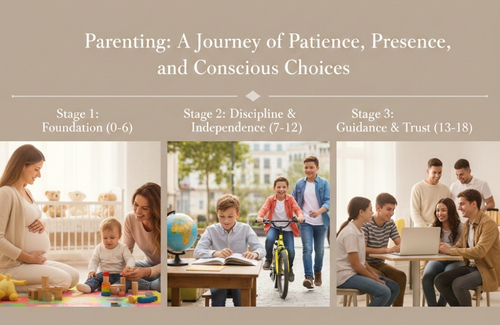
Stage 3: Ages 13 to 18 – Guidance, Trust, and Friendship
Adolescence is a sensitive and crucial phase. Curiosity increases, emotions fluctuate, and children begin exploring the adult world. If strong values have been nurtured until the age of 12, parents have much less to worry about.
At this stage, parents must slowly transition into the role of a trusted friend. Encourage open conversations and be prepared to answer all questions honestly. Children often learn from peers, so being aware of their friendships and activities is essential. Monitoring phone usage should be done transparently and with trust—not secrecy.
Gradually allow social independence—such as going to malls or movies with friends—especially from ages 16 to 18, while clearly explaining boundaries and consequences beforehand.
By this phase, children should be capable of taking responsibility for their studies, assignments, and exam preparations—whether for school, competitive exams, or college admissions.
A Gentle Reminder to Parents
Always communicate with your children as friends, but lead them with responsibility as parents. Spend time with them, listen deeply, and stay emotionally available.
For parents living in countries like the USA, children often move to hostels during college—sometimes as early as the first year. Once this transition happens, opportunities to guide and correct become limited. By then, it may already be too late.
Also Read: Border 2: Echoes of a Classic, Without Its Soul
Parenting is not about perfection; it is about presence. Every moment invested with love, awareness, and patience shapes a confident, compassionate adult.
I hope these experiences and insights help many mothers navigate their parenting journey with clarity and confidence.
Take care, and happy parenting. 💜😊


One Response