

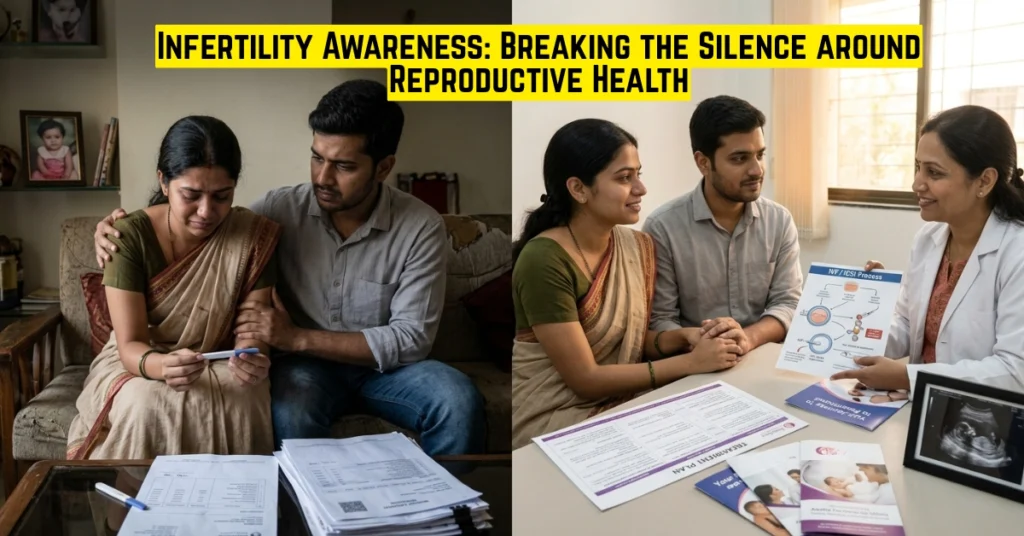
Infertility has increasingly become a major health concern affecting couples around the world. Medical experts estimate that approximately one in six couples may experience difficulty conceiving at some point in their reproductive journey. While the topic was once considered sensitive and rarely discussed openly, growing awareness and advances in medical science have encouraged more couples to seek professional guidance and treatment.
Infertility is typically defined as the inability to conceive after one year of regular, unprotected intercourse. For women above the age of 35, doctors often recommend evaluation after six months of trying to conceive. However, infertility is not solely a women’s health issue; medical research shows that male and female factors contribute almost equally to fertility challenges.
In women, infertility may arise from a range of conditions that affect ovulation or the reproductive organs. Hormonal imbalances are among the most common causes, particularly conditions such as Polycystic Ovary Syndrome (PCOS), which can interfere with the normal release of eggs from the ovaries. Other factors include Endometriosis, a condition in which tissue similar to the uterine lining grows outside the uterus, potentially affecting reproductive organs. Blocked or damaged fallopian tubes, uterine abnormalities, and an age-related decline in egg quality can also influence a woman’s ability to conceive.
Male infertility is also a significant contributor to reproductive difficulties. Problems related to sperm count, motility (movement), or morphology (shape) can affect fertilization. Hormonal disorders, infections, genetic conditions, or structural issues within the reproductive system may also play a role. In many cases, simple diagnostic tests can identify these concerns and guide appropriate treatment.
Beyond medical causes, lifestyle factors have become increasingly important in fertility discussions. Stress, poor nutrition, lack of physical activity, smoking, alcohol consumption, obesity, and exposure to environmental toxins can all negatively impact reproductive health in both men and women. The modern urban lifestyle—often characterized by long work hours, irregular sleep patterns, and increased stress levels—has been linked to rising fertility challenges among younger couples.
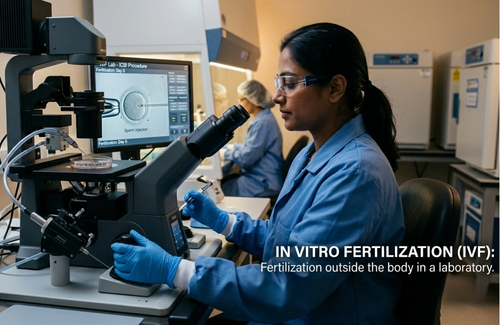
Despite these concerns, advances in reproductive medicine have significantly improved the chances of successful treatment. Assisted reproductive technologies have transformed infertility care over the past few decades. One of the most widely known treatments is In Vitro Fertilization (IVF), where fertilization occurs outside the body in a laboratory before the embryo is transferred to the uterus. This technique has helped millions of couples worldwide achieve pregnancy.
Other medical innovations have also expanded treatment options. Fertility preservation techniques allow individuals to store eggs, sperm, or embryos for future use, which can be especially helpful for those undergoing medical treatments that may affect fertility or for those choosing to delay parenthood. Cryopreservation technology has made it possible to safely store reproductive cells for extended periods while maintaining their viability.
Also Read: Young Women and Heart Disease: Why the Risk Is Rising in Their 20s & 30s
Equally important in the journey toward parenthood is addressing the emotional and social dimensions of infertility. In many cultures, couples experiencing difficulty conceiving may face stigma, misunderstanding, or social pressure. Such attitudes can discourage individuals from seeking timely medical advice. Healthcare professionals increasingly emphasize that infertility is a medical condition, not a personal failing, and that early consultation with specialists can significantly improve treatment outcomes.
Today, specialized fertility clinics play a vital role in delivering comprehensive reproductive care. These centres combine advanced laboratory facilities, experienced fertility specialists, and personalized treatment plans to address the diverse causes of infertility. Institutions such as AM Medical Centre Pvt. Ltd. have contributed to expanding access to infertility care through dedicated reproductive medicine services, advanced IVF facilities, and modern cryobank infrastructure. By integrating medical expertise with compassionate care, such centres aim to support couples navigating one of the most important journeys of their lives—the path toward parenthood.