

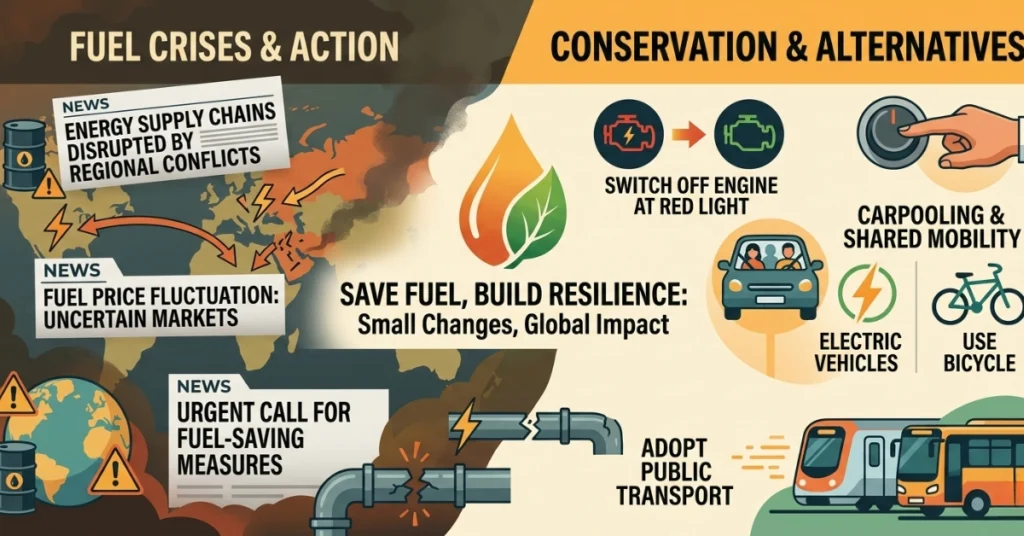
As tensions and conflicts continue to disrupt global fuel supply chains, governments and citizens across the world are being urged to adopt fuel-saving measures to reduce pressure on energy resources. The ongoing war situation in several regions has triggered uncertainty in crude oil markets, causing fluctuations in fuel prices and raising concerns about long-term energy security.
In India, experts are advising people to become more mindful of daily fuel consumption. Simple lifestyle changes such as using public transport, carpooling, switching off engines during long traffic stops, and maintaining proper tyre pressure can significantly reduce fuel wastage. Authorities are also encouraging work-from-home options where possible to cut unnecessary travel.
The crisis has highlighted how heavily modern economies depend on imported oil. Rising transportation and logistics costs are already affecting food prices, household expenses, and small businesses. Economists believe that conserving fuel at an individual level can collectively ease economic pressure during uncertain times.
Environmentalists have also pointed out that fuel conservation not only helps during geopolitical crises but also contributes to reducing carbon emissions and combating climate change. Many citizens are now turning towards bicycles, electric vehicles, and shared mobility solutions as practical alternatives.
Also Read: Nourish Her Heart: A Mother’s Day Menu for Internal Vitality
Several countries have launched awareness campaigns asking citizens to avoid unnecessary journeys and adopt energy-efficient habits. In metropolitan cities, metro rail usage and public transportation have seen increased promotion as sustainable options.
Energy analysts warn that if the conflict continues, fuel prices may remain volatile for an extended period. In such a scenario, responsible fuel usage and alternative energy adoption may become not just economic choices, but necessities.
The present crisis serves as a reminder that every drop of fuel saved today contributes towards national resilience tomorrow.