

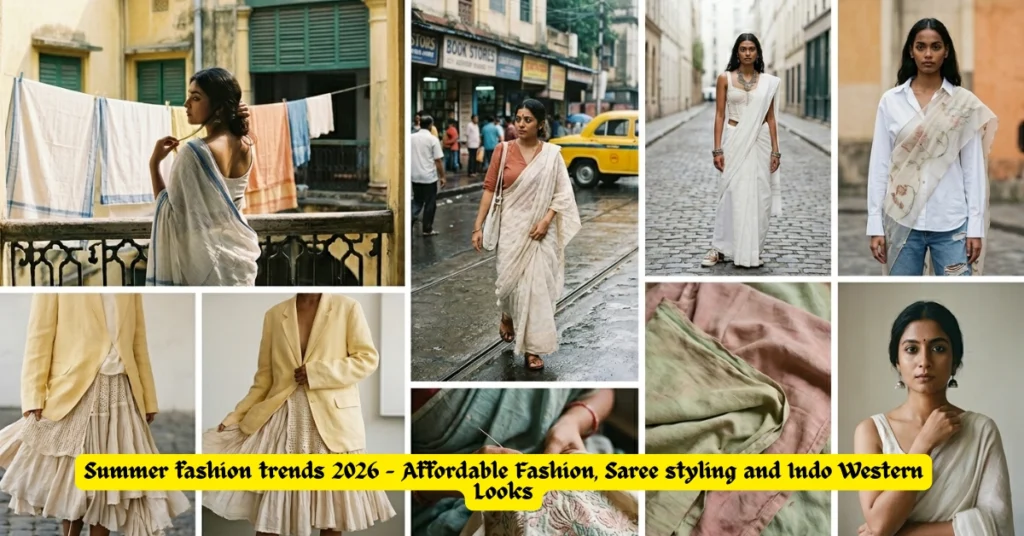
Bengali summers have always believed in authenticity over artificiality.
Perhaps it is the sight of crisp cotton sarees drying under harsh sunlight on old Kolkata balconies. Or the smell of rain settling over yellow taxis, College Street books, and tram tracks after an unbearable afternoon heatwave. Bengali women exude an elegance that does not need excess- just the right amount of a loosely draped cotton or linen saree, kohl-smudged eyes, silver and dokri jewellery, and quiet confidence can carry more power than all the sequins in the world combined.
And strangely enough, the fashion trends of summer 2026 seem to be arriving at that same realisation.
After years dominated by drab minimalism, aesthetics that are curated by the algorithm, and the exhausting performance of “quiet luxury,” global fashion is beginning to soften. The runways of Vogue, Harper’s Bazaar, and ELLE are no longer obsessed with manufacturing one singular version of the fashionable woman. Instead, Summer 2026 embraces texture, individuality, craftsmanship, emotional dressing, and practical glamour, which relies heavily on indigenous embroideries that Bengali fashion, interestingly enough, has quietly embodied for generations.
For nearly half a decade, fashion was trapped in the era of hyper-minimalism. Beige blazers. Emotionless tailoring. Clean-girl aesthetics polished and trampled over personal style. Luxury became increasingly sterile, as though women were expected to become curated products rather than human beings with personalities, contradictions, and emotional depth.
This summer brings back the essence of individual fashion that is in tandem with who they are. Texture has emerged as the defining language of Summer 2026 and has sidelined loud logos and brand details. Across editorials and runway collections, designers are leaning into fabrics that crease, move, wrinkle, and breathe like real life itself. Chiffon overlays, crushed cottons, crochet work, hand embroidery, transparent layering, frayed hems, visible seams, artisanal detailing are the main focus of this year’s summer fashion goals. Presence is.
There is something deeply emotional about this shift. After years of digital flatness and hyper-curated online aesthetics, fashion suddenly seems desperate to feel physical, no more excessive reliance on Pinterest boards. Clothes are being worn to mimic movement, rather than sticking to a form.
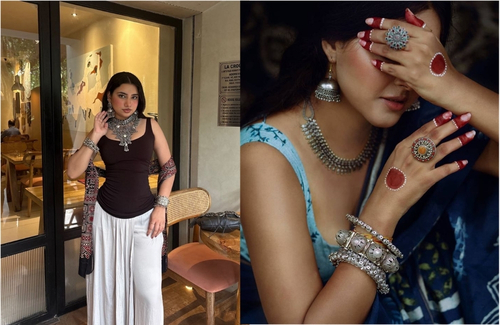
A handwoven Bengal tant saree has never needed excessive embellishment to command attention. Neither has a soft Dhakai jamdani worn during suffocating summer afternoons. Bengali fashion has always thrived on subtlety , on craftsmanship so intricate that it never needed to scream for validation. There is an effortless intellectualism to it, a quiet confidence rooted in culture rather than consumption. Perhaps this is what modern styling feels like.
Perhaps that is why Indian textiles, particularly Bengali handlooms, feel so aligned with global Summer 2026 aesthetics. The fashion world’s renewed obsession with visible craftsmanship and artisanal work has created space for traditions once dismissed as “simple” or “too traditional.” Handloom is no longer being treated as ethnic nostalgia. It is a luxury.
And nowhere is this transformation more visible than in the evolution of the saree itself.
The saree in 2026 exists in a fascinating middle ground between tradition and reinvention. A crisp white tant paired with a structured corset blouse. Mulmul sarees styled with silver jewellery and sneakers. Organza drapes layered over oversized shirts. Oxidised bangles worn alongside masculine tailoring. The saree is no longer merely a garment it has become a styling language.
What makes this moment particularly powerful is that women are no longer dressing solely to appear decorative. There is intention behind styling now. Ease matters. Breathability matters. Rewearability matters. Women want clothes that can survive office commutes, long workdays, unbearable heatwaves, spontaneous dinner plans, crowded streets, and sudden monsoon rain without demanding discomfort in exchange for beauty.
And fashion magazines are finally acknowledging that practicality itself can be elegant.
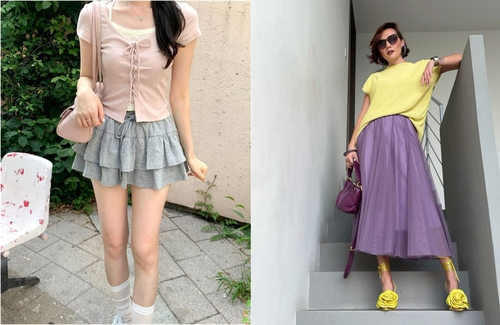
Even the return of femininity this season feels remarkably different from previous eras. Polka dots, romantic skirts, sheer layering, bows, translucent fabrics, flowing silhouettes ,they are all returning, but without the exaggerated theatricality of the past. A flowing skirt is paired with oversized tailoring. Delicate fabrics meet structured leather. Transparency is controlled rather than performative.
There is sensuality here, certainly, but it no longer feels desperate for attention.
In fact, one of the most significant shifts this season is fashion’s movement away from hyper-sexual dressing. The body is no longer aggressively compressed into bodycon silhouettes and restrictive structures. Instead, it is suggested through layering, drape, movement, and translucency. There is confidence in concealment now. Mystery has returned to fashion after years of overexposure.
That restraint feels deeply familiar to Bengali aesthetics.
Bengali beauty has rarely relied on overt extravagance. It has always existed somewhere between melancholy and softness, intellect and sensuality. The image of a woman standing near an open window during a storm, reading Tagore in a faded cotton saree, remains more culturally seductive here than heavily logo-driven luxury ever could.
And perhaps that is the larger emotional truth shaping Summer 2026 fashion globally: women are exhausted by performance. Fashion this year reflects that fatigue while also offering a quiet rebellion against it.
The current period shows softer color palettes than past times. The colors of butter yellow, terracotta, dusty rose, faded pistachio, monsoon blue, muted lavender, sun-washed orange create an effect which resembles authentic used colors instead of artificial loudness. All objects now possess soft qualities without any remaining harsh elements. The combination of sunlight with humidity and movement makes even bright colors appear less intense. People can experiment with chic color combinations which combine lavender with butter yellow and grey with baby pink.
Also Read: Mothers Who Inspire: Real Stories of Strength Feature working moms, single mothers, homemakers, and entrepreneur moms
The fashion period exhibits a human quality through its soft character which defines this period.
The Summer 2026 dominant woman presents an aesthetic challenge which requires multiple definitions. She can wear a Bengal cotton saree one day, oversized Western tailoring the next, and a sheer romantic skirt over combat boots by the weekend without feeling pressured to belong to only one visual identity.
The moment requires fluidity because it brings about fresh experiences.
Fashion has entered its first period after several years during which it stopped pursuing uniformity among women. The industry now supports women in developing their authentic selves by showing their diverse personalities which include emotional aspects and development through time.
Fashion has developed into an industry which depends on new trends but this particular trend represents the most daring innovation.