

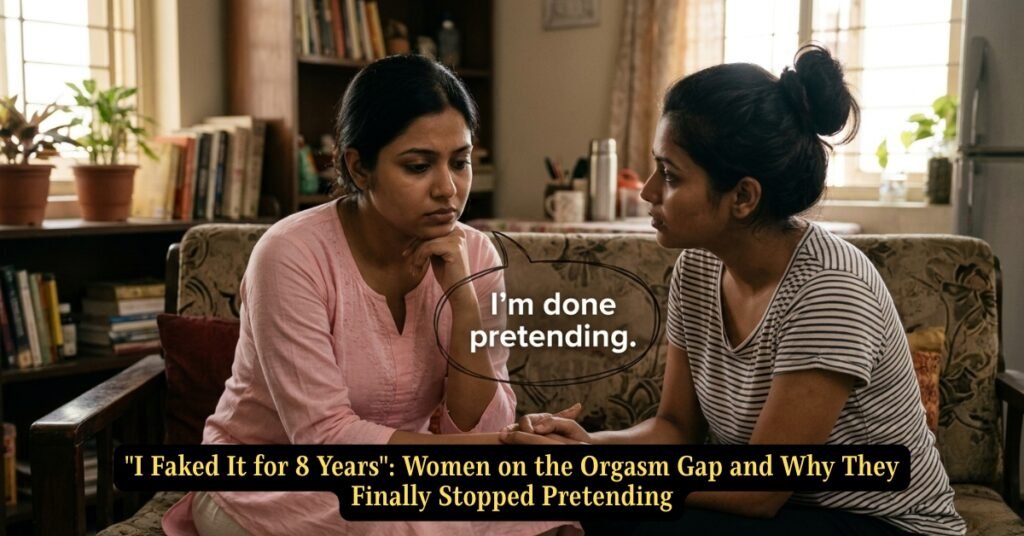
The biggest performance in many bedrooms isn’t passion or romance—it’s acting.
For decades, women have been conditioned to be excellent performers. Not in boardrooms or on stage, but between the sheets. The “orgasm gap”—the well-documented disparity between male and female sexual satisfaction—is finally stepping out of the shadows, and women are no longer whispering about it.
“I faked it for eight years,” admits a 36-year-old marketing professional from Mumbai.
“At first, I didn’t want to hurt his feelings. Later, it became a habit. Eventually, I realized I was lying to both of us.”
She is far from alone.

Understanding the Orgasm Gap:
Research from around the world consistently shows that heterosexual women experience significantly fewer orgasms than their male partners. Yet many continue to pretend, smile, and move on.
Why?
The reasons are surprisingly familiar: avoiding awkward conversations, protecting a partner’s ego, ending an unsatisfying encounter, or simply believing their own pleasure isn’t important enough.
The real question is this: Why are women expected to perform satisfaction instead of experiencing it?
The Culture of Silence Around Female Pleasure
For generations, female desire has been wrapped in layers of silence. Women were taught how to be attractive, accommodating, and desirable—but rarely encouraged to understand or communicate their own needs.
The result is a culture where many women learn how to fake pleasure before they learn how to ask for it.
The pandemic years brought an unexpected shift. Conversations around mental health, emotional well-being, body positivity, and sexual wellness entered mainstream discourse.
Women began asking a radical question:
“What about my pleasure?”
And that question changed everything.
Why More Women Are Speaking Up
Across social media, podcasts, books, and wellness forums, women are openly discussing intimacy, sexual satisfaction, consent, and communication. What was once considered taboo is becoming part of everyday conversation.
A 42-year-old entrepreneur from Kolkata puts it bluntly:
“I stopped pretending because I got tired of rewarding mediocrity.”
Her statement may sound harsh, but it reflects a growing sentiment. Many women are discovering that honesty, though uncomfortable at first, creates healthier relationships than years of silent performance.
Communication, Not Blame
Experts agree that the solution isn’t blame—it’s communication. The orgasm gap isn’t simply about technique; it’s often about understanding. Intimacy thrives when both partners feel safe discussing preferences, expectations, and desires without judgment. Genuine connection begins where performance ends.
Also Read: The Dirty Secret No One Talks About: Can Constipation Destroy Your Intimacy?
A Bigger Shift in Women’s Empowerment
Interestingly, younger women appear more willing to challenge old norms. They are less likely to view sexual satisfaction as a luxury and more likely to see it as an essential part of a healthy relationship.
They are asking questions, setting boundaries, and refusing to settle for emotional or physical dissatisfaction.
What makes this conversation even more significant is its impact beyond the bedroom.
Relationship experts note that women who suppress their needs in intimate relationships often do the same in other areas of life—whether in careers, friendships, or family dynamics.
The decision to stop faking an orgasm is, in many ways, symbolic of a larger shift. It reflects a growing willingness among women to speak up, ask for what they deserve, and reject the pressure to constantly please others.
In a society that has long rewarded female silence, choosing honesty has become a quiet but powerful act of self-respect and empowerment.
The End of Pretending
Perhaps that’s the real story here. This isn’t just about orgasms. It’s about authenticity.
It’s about women deciding that politeness should not come at the cost of honesty. It’s about rejecting the age-old script that tells women to prioritize everyone else’s comfort over their own experience.
The era of pretending is losing its audience. And as more women step forward to say, “I faked it,” they are not confessing failure. They are reclaiming truth. Because the most intimate revolution isn’t happening in bedrooms. It’s happening in conversations.