

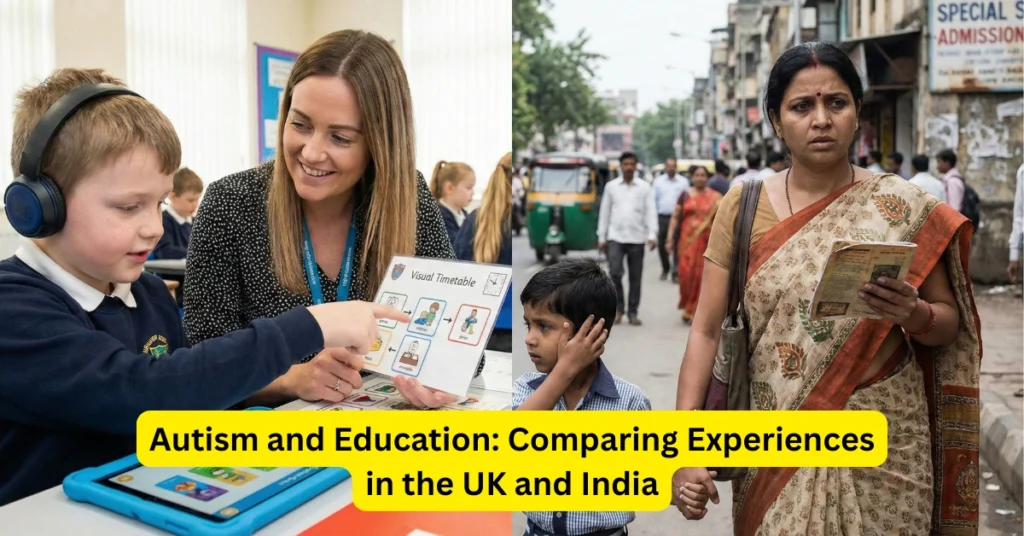
When we look at how the United Kingdom and India support autistic children, the differences are not just structural—they’re deeply human. In the UK, the system is far from perfect, but it’s grounded in rights, dignity, and a long-term view of care. In India, although laws exist on paper, families often face a lonely and uphill battle. Services are fragmented, underfunded, and tangled in layers of social stigma. What makes the real difference isn’t just policy—it’s mindset.
Bridging the Gap with Inclusion:
In the UK, autism is recognised under Special Educational Needs (SEN), and schools are legally required to follow the Special Educational Needs and Disability (SEND) framework. With tailored plans like EHCPs (Education, Health and Care Plans), autistic students receive support that goes beyond textbooks. They’re seen as individuals with unique ways of thinking and learning. Some attend mainstream schools with adjustments in place, while others thrive in specialist environments designed to meet their needs.
In India, the 2016 Rights of Persons with Disabilities Act officially includes autism, but enforcement is weak. Many schools lack even a basic understanding of what autism is. Inclusion, when it happens, is often superficial. Special schools exist, but they are usually expensive and often clustered in cities. Rural families frequently have nowhere to turn.
Listening to the Child
What stands out about the UK system is that it listens. Autistic children are encouraged to express what works for them. Their choices are not just heard—they’re respected. These preferences are factored into formal education plans, creating a sense of agency and self-worth.
In India, education is often top-down. Children are expected to adjust to the system, not the other way around. There’s little room for dialogue. Autistic students are frequently forced into conventional moulds that don’t serve them, causing stress and disconnection.
Life Skills vs Academic Pressure in Autism
UK schools understand that life is more than exams. Autistic students are taught practical skills: how to cook a meal, manage money, travel safely, and communicate effectively. These lessons prepare them not just for school but for adulthood.
In India, the focus is academics, academics, academics. Families chase grades, often out of fear for the child’s future. But in the process, basic life skills are neglected. Many autistic teens grow into adults who can solve a math problem but can’t cross the street on their own. It’s a quiet crisis.
Planning for the Future
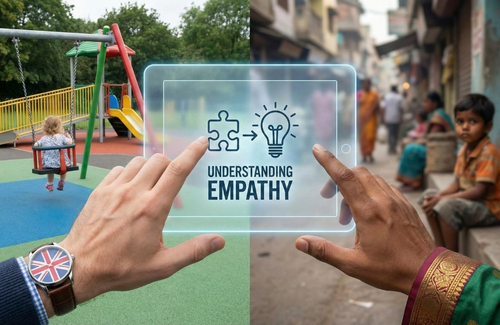
In the UK, long-term care is an integral part of the healthcare system. From supported living and adult social care to legal guardianship and trusts, there are mechanisms in place to ensure that autistic individuals are not abandoned when their parents are gone. Planning begins early, often during the teenage years, with the help of professionals and local authorities.
In India, this safety net doesn’t exist. There are almost no government-backed housing options. Parents often live in fear of what will happen to their child after they pass away. The burden falls on siblings or extended family—if any are willing and able to help. It’s a source of deep anxiety for countless families.
Acceptance Starts at Home
Parental attitudes differ greatly, too. In the UK, many parents begin their journey overwhelmed, but they find support networks and a growing culture of acceptance. Over time, they focus less on “fixing” their child and more on helping them thrive in their own way.
In India, the emotional weight is heavier. Stigma leads many families into denial. Even when a diagnosis is accepted, the pressure to make the child appear “normal” persists. Too often, love becomes entangled with unrealistic expectations, particularly in the realm of academic achievement.
How Society Sees Them?
In the UK, autistic children and adults are increasingly visible in public life. There is a broader social understanding, greater representation, and a willingness to accommodate. You might see someone using noise-cancelling headphones in a supermarket or receiving patient support in a classroom—and it’s accepted.
In India, autism is still hidden. Families fear judgment. People whisper. Awareness is growing, but slowly. Many autistic individuals are kept out of public life, not because they can’t participate, but because society hasn’t learned how to include them.
Rethinking India’s Approach
If India truly wants to move forward, it must stop treating autism as a temporary educational hurdle and start seeing it as a lifelong condition that deserves structured, compassionate, and personalised support. This means:
-
Designing school curricula that include life skills, not just academics
-
Training teachers in neurodiversity and inclusive practices
-
Building long-term care and housing solutions
-
Enforcing disability rights with accountability, not just paperwork
-
Shifting parenting culture from performance pressure to understanding and support
Also Read: Midlife Habits Matter: Key Lifestyle Habits for Women’s Heart Health
Autistic children are not broken. They don’t need to be made “normal.” They need to be seen, heard, and supported. The UK, despite its imperfections, is taking steps in that direction. India has the tools—the laws, the knowledge, the people who care—but it lacks the will to act with urgency and empathy.
Inclusion isn’t about fitting autistic individuals into the world as it is; it’s about changing the world to accommodate them. Until India embraces that truth, the gap will remain wide, and far too many will be left behind.