

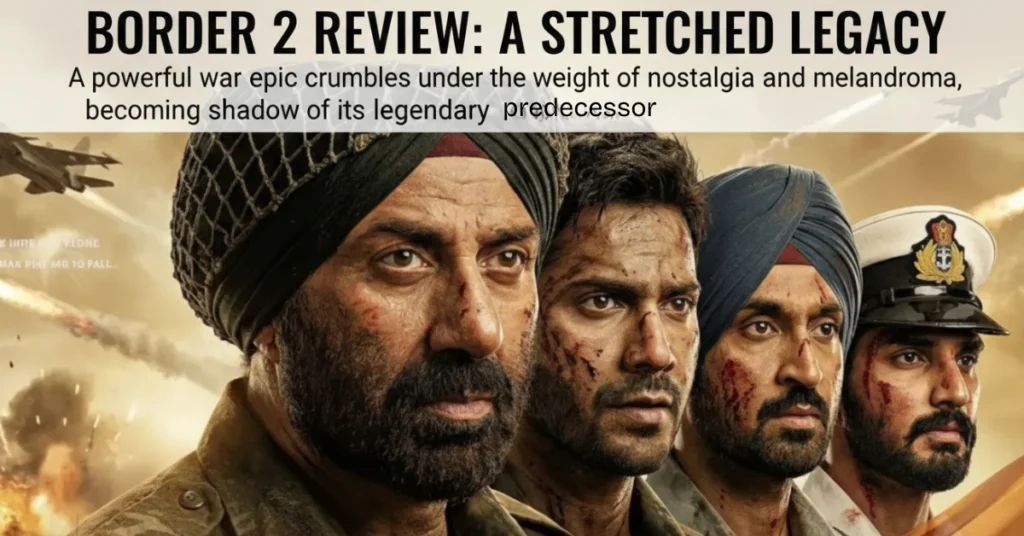
I walked into Border 2 with respect — not expectations, but respect. Because Border was never just a film. It was a moment in time that captured fear, duty, brotherhood, and sacrifice with rare emotional honesty. For many viewers, it remains a benchmark in war cinema — not for spectacle, but for soul.
Sadly, Border 2 turns that legacy into a long, uneven, and often exhausting watch. What should have been a powerful continuation instead feels stretched, episodic, and emotionally thin. The film unfolds in fragments — scenes exist, but storytelling momentum does not. Where the original moved with purpose and dramatic clarity, the sequel drifts without a strong narrative spine.
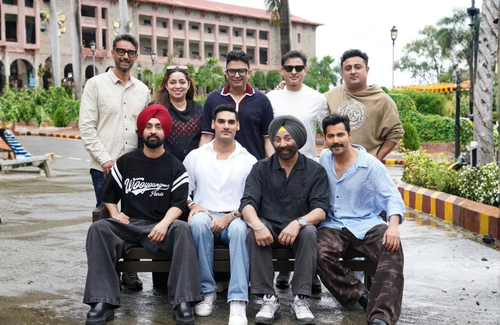
One of the film’s greatest weaknesses lies in its reliance on patriotism as a storytelling shortcut. When national pride is layered onto solid writing, it elevates emotion. When it replaces character development and plot depth, it becomes noise. In Border 2, chest-thumping arrives before emotional investment, making moments feel forced rather than earned. The original Border never instructed the audience to feel proud — it showed the human cost of war, allowing pride to emerge naturally and quietly.
The rhythm of the film suffers further from unnecessary melodrama and poorly timed songs. War films thrive on tension, restraint, and silence as much as sound. Here, musical interludes and dramatic exaggeration repeatedly break immersion instead of deepening it. These elements feel included out of obligation to nostalgia rather than in service of the story.
Nostalgia itself becomes another overused tool. Callbacks to the original film are treated as emotional currency, but nostalgia only works when it carries meaning. When reduced to references, it feels hollow — a reminder of what once was rather than a bridge to something new.
Yet this critique goes beyond one sequel. Border 2 reflects a broader creative discomfort shaping today’s cinema — a growing fear of risk, where familiarity replaces originality and branding replaces belief. We are not in creative bankruptcy yet, but we are inching closer to creative stagnation.
Also Read: Intentional Dating in 2026: Clarity, Emotional Honesty & Friendfluence in Love and Relationships
Intent is replacing depth. Volume is replacing voice. Recognition is replacing storytelling courage. Some stories do not need sequels. They need successors in spirit — films that honour legacy without exploiting it. Cinema deserves that honesty. And so do audiences.