

Maternal Anxiety: The Silent Struggle Many Mothers Face
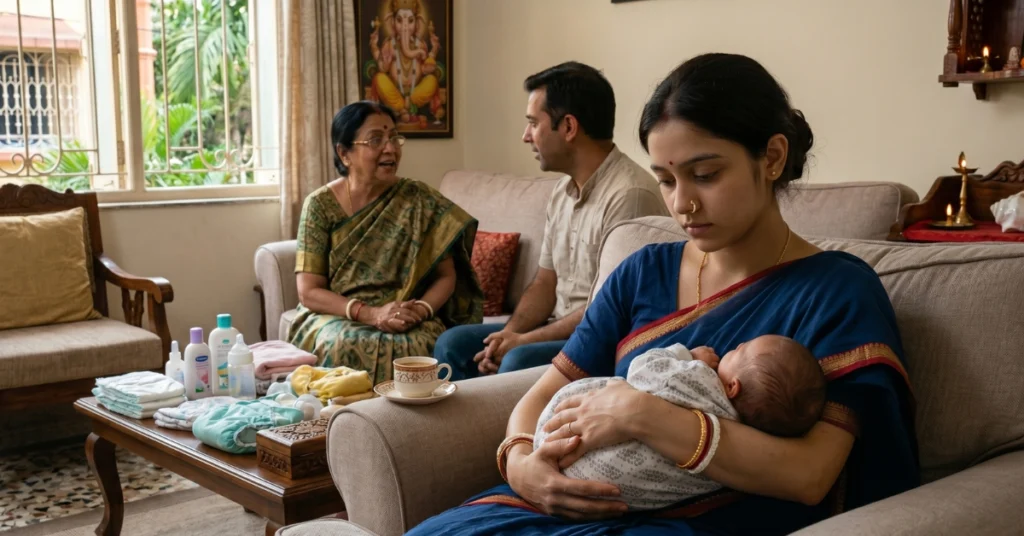
She holds her newborn close, and beneath the overwhelming love, a quiet knot tightens inside her. Her thoughts race endlessly: Am I doing this right? What if something goes wrong? Why can’t I simply enjoy this moment? She smiles when visitors arrive, nods politely when asked if she is well, and silently carries a heaviness she cannot quite explain.
In my years of clinical practice, I have met this mother many times. She is gentle, capable, deeply loving — and yet profoundly exhausted, anxious, and afraid to say so aloud. Maternal anxiety remains one of the most common, and most silently endured, emotional realities of motherhood. It is time we spoke about it with the honesty, compassion, and dignity it deserves.
Understanding Maternal Anxiety
Maternal anxiety refers to persistent feelings of worry, fear, or unease that may arise during pregnancy and continue through the postpartum months — sometimes even years after childbirth. While concern for a child is a natural part of motherhood, maternal anxiety becomes significant when those fears grow intense enough to disturb sleep, peace of mind, emotional connection, and the ability to experience daily life fully.
Conversations around postpartum mental health often focus primarily on depression, yet anxiety affects nearly as many mothers — and, in some cases, even more. Society still expects women to move through motherhood looking grateful, radiant, and effortlessly composed. As a result, anxiety frequently hides in plain sight. It hides behind perfectionism, endless organisation, constant overthinking, and brave smiles that rarely reveal the emotional storm beneath.
The Emotional Landscape of Pregnancy and Postpartum
Few life transitions are as physically and emotionally transformative as becoming a mother. The body changes. Hormones fluctuate dramatically. Sleep becomes fragmented. Identity stretches in unfamiliar ways, making room for a new role while older roles — partner, professional, daughter, friend — continue demanding attention.
During pregnancy, anxiety may appear as persistent worry about the baby’s health, fear surrounding childbirth, or intrusive thoughts that feel difficult to control. In the postpartum period, it often manifests as hypervigilance — repeatedly checking on the baby, struggling to rest even when the baby sleeps, or feeling unable to leave the child with anyone else.
For some women, these feelings pass quietly with time. For others, anxiety arrives suddenly and intensely, like a wave that refuses to retreat.
These experiences are not signs of weakness or failure. They are signs of a mother carrying far more than the world around her often recognises.
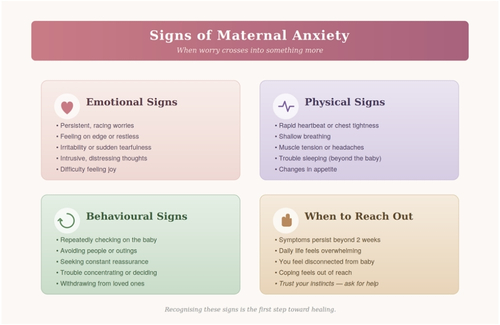
Signs and Symptoms to Recognise:
Anxiety wears many faces, and recognising it is the first step toward healing. Some of the most common emotional, physical, and behavioural signs include:
- Persistent worry or racing thoughts
- Difficulty sleeping, even when exhausted
- Irritability or emotional overwhelm
- Restlessness or inability to relax
- Physical symptoms such as chest tightness, headaches, nausea, or rapid heartbeat
- Intrusive fears about the baby’s safety
- Constant reassurance-seeking or repetitive checking behaviours
- Feeling disconnected from joy, calmness, or confidence
No single symptom confirms maternal anxiety, and not every difficult day signals a mental health condition. But when these patterns persist for two weeks or more — or begin affecting a mother’s ability to function, rest, or emotionally connect with herself and her child — it becomes important to seek support.
Why Mothers Hesitate to Speak?
In my consultation room, I often hear the same quiet confessions:
“I should be happier.”
“Everyone else seems to be coping better.”
“I don’t want to sound ungrateful.”
“What if people think I’m a bad mother?”
These words reveal the enormous pressure women continue to carry beneath the surface. The myth of the “perfect mother” still weighs heavily on modern motherhood. Cultural expectations, generational silence, social comparison, and fear of judgment create an environment where many women suffer quietly rather than risk appearing inadequate.
But struggling does not make a woman a bad mother. It makes her human.
Why Normalising the Conversation Matters?
When we speak openly about maternal anxiety, something powerful begins to shift. We remind mothers that they are not alone in their fears. We give partners, families, and communities the language to recognise emotional distress with empathy instead of misunderstanding. We create space for healing instead of shame.
Normalising maternal anxiety does not mean medicalising every emotional moment. It means allowing honesty to exist without judgment. It means acknowledging that motherhood can hold deep love and deep difficulty at the same time.
And perhaps most importantly, it means ensuring that no mother feels she must suffer in silence simply to appear strong.
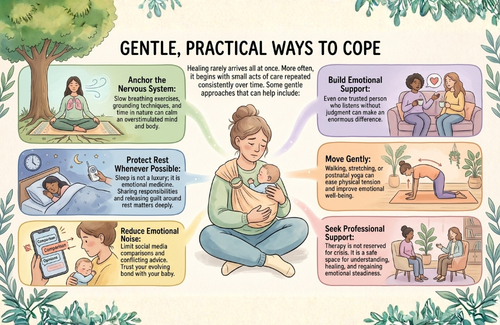
Gentle, Practical Ways to Cope:
Healing rarely arrives all at once. More often, it begins with small acts of care repeated consistently over time.
Some gentle approaches that can help include:
- Anchor the nervous system: Slow breathing exercises, grounding techniques, and time in nature can calm an overstimulated mind and body.
- Protect rest whenever possible: Sleep is not a luxury; it is emotional medicine. Sharing responsibilities and releasing guilt around rest matters deeply.
- Reduce emotional noise: Limit social media comparisons and conflicting advice. Trust your evolving bond with your baby.
- Build emotional support: Even one trusted person who listens without judgment can make an enormous difference.
- Move gently: Walking, stretching, or postnatal yoga can ease physical tension and improve emotional well-being.
- Seek professional support: Therapy is not reserved for crisis. It is a safe space for understanding, healing, and regaining emotional steadiness.
When anxiety begins interfering with daily life, professional care should never be viewed as a last resort. Evidence-based approaches such as cognitive behavioural therapy, mindfulness-based support, and — where necessary — medical intervention under qualified guidance can bring meaningful relief.
Reaching out for help is not weakness. It is self-respect.
Also Read: Women’s Mental Health & Burnout: What Years in Therapy Have Taught Me
A Closing Note of Hope:
To every mother reading this with tired eyes and a heavy heart — please know this: the love you feel for your child is real, and so is the difficulty of this season. Both truths can coexist.
Anxiety does not make you less capable, less grateful, or less worthy as a mother. If anything, it reflects the depth of your care.
Healing often begins with a single honest sentence — spoken to yourself, to someone you trust, or to a professional willing to walk beside you. You are allowed to need support. You are allowed to rest. You are allowed to be beautifully imperfect while learning motherhood one day at a time.
Let us continue this conversation — in our homes, hospitals, friendships, workplaces, and communities. Because when we normalise talking about maternal anxiety, we do not simply help one mother.
We help generations of women feel seen, supported, and less alone.