

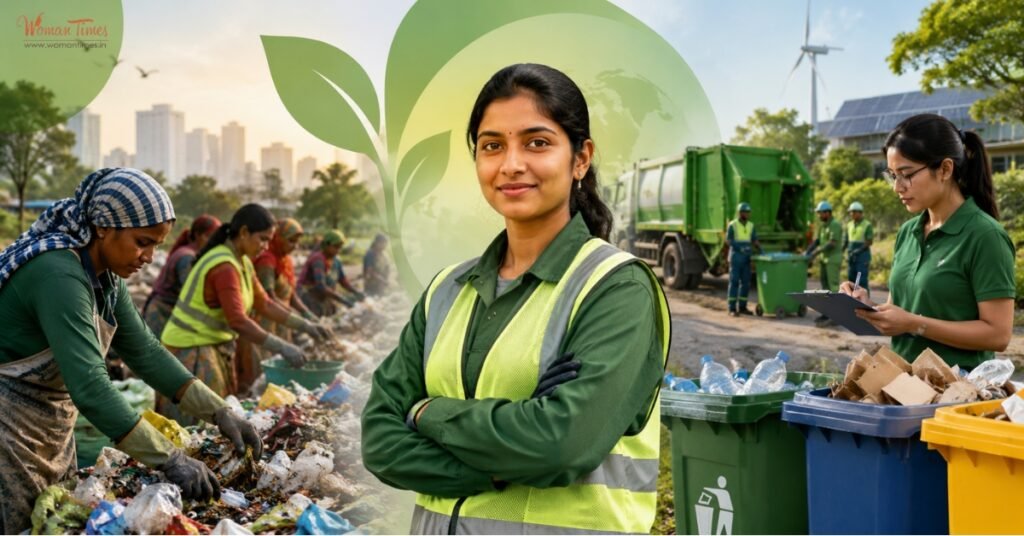
Historically, the solid waste sector offered limited interest or professional opportunities for women. However, a shifting paradigm is transforming the industry. As global priorities move away from landfilling toward waste prevention, resource recovery, and the circular economy, more women are finding the sector an attractive career choice.
Furthermore, solid waste management is gaining international recognition for its critical role in achieving the United Nations’ Sustainable Development Goals (SDGs) and mitigating climate change. It will not be long before the waste sector faces the same scrutiny regarding gender equity and operational standards as legacy utilities.
Role of Women in the Global Solid Waste Sector
Women are playing an increasingly important role in transforming the global waste industry. From promoting sustainable practices to driving innovation in recycling and resource recovery, their contributions are helping shape a more efficient and environmentally responsible future. As the sector evolves toward circular economy principles, women’s participation and leadership are becoming essential for long-term success.
From Household to the Informal Sector
Women have long been at the forefront of waste management, particularly at the household level, where they typically manage waste segregation. In developing economies like India, women dominate informal waste collection and recycling activities. They play a vital role in sorting and processing materials like paper and plastic, contributing significantly to local recycling economies.
Despite their impact, these women remain highly marginalized. They face severe systemic barriers, including a lack of official recognition, poor working conditions, and limited access to resources. While initiatives like Women of Waste (WOW!) work to amplify their voices and link gender equity with environmental sustainability, further research is urgently needed. Documenting their contributions will help advocate for policy inclusion, formalization, and training programs within circular economy models.
Also Read: Earth Day Special: Impact of plastic pollution on the environment
A Global and Multifaceted Contribution
Globally, women drive the solid waste sector across all levels. They operate as household managers, engineers, collectors, and recyclers, as well as activists, researchers, policymakers, corporate managers, and government ministers.
To quantify this impact, a 2018 global online survey titled Mapping the Status of Women in the Global Waste Management Sector was conducted by the WOW! initiative and supported by the International Solid Waste Association (ISWA). The study surveyed 626 women across 73 countries. While the majority of responses came from upper-middle and high-income nations, the data highlighted many highly qualified, experienced women active in low- and lower-middle-income countries as well.
The survey revealed where women are currently positioned within the workforce:
- Local Government: 30.2%
- Private Waste Management Companies: 14.4%
- Consulting / Engineering Firms: 13.3%
Driving the Circular Economy
The data underscores a major demographic shift. Women are entering the waste sector at all career stages, from ambitious young entrants to well-established professionals.
Crucially, their roles reflect a modern, proactive approach to breaking the global waste crisis. While only 12.5% of respondents work in traditional landfill management, a striking 51.6% operate in waste prevention, reuse, repair, refurbishment, and recycling. This distribution proves that women are not only visible across the waste management hierarchy but are actively leading the transition toward a sustainable, circular future.